
When Is a Dental Crown the Best Way to Protect a Tooth?
A damaged tooth doesn’t automatically need a crown. Sometimes a small area of decay can be repaired with a filling. A minor chip may need a different approach, but when a tooth has lost enough strength or structure that a smaller restoration can’t provide the protection it needs, a dental crown may be the better option.
When a Filling May Not Be Enough
Fillings repair areas where decay or damage has been removed while leaving the remaining healthy tooth structure intact, but there is a limit to how much work a filling can do. Imagine a back tooth with a very large area of decay or an older filling that already takes up a significant portion of the tooth. If the remaining natural structure has become thin or weak, placing another filling may not provide enough support. A crown takes a different approach. Instead of repairing only one portion of the tooth, it covers the damaged tooth to restore its shape, strength, and function.
Protecting a Weak Tooth
Crowns can help when a tooth needs more reinforcement. Extensive decay is one example. A tooth that has been significantly damaged or fractured may also benefit from the additional coverage of a crown. Teeth with very large existing restorations can sometimes reach a point where there simply is not enough strong natural structure remaining to reliably support another filling. The goal is to protect what remains.
That distinction matters because restorative dentistry isn’t just about repairing the damage we can see now. We also have to think about how the tooth will handle the pressure of biting and chewing in the future.
Why Does Full Coverage Make a Difference?
Your back teeth handle considerable force every time you chew, and when a tooth is healthy, its structure helps distribute those forces. Once a substantial portion has been lost to decay, damage, or previous dental work, the remaining tooth may become more vulnerable.
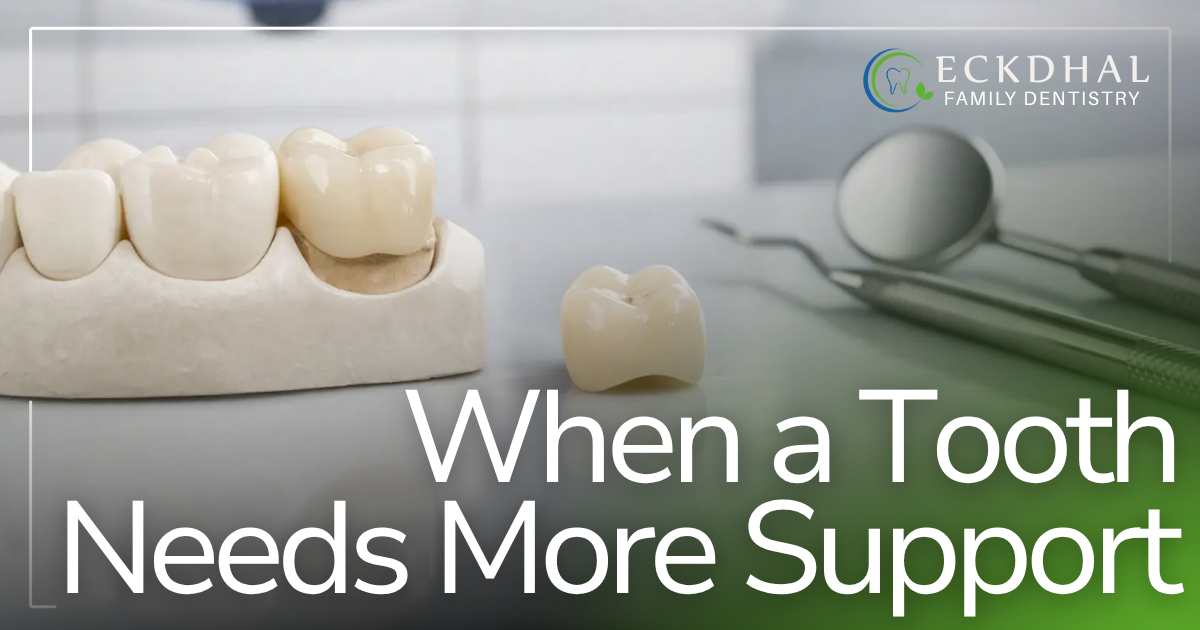
A crown surrounds the weak tooth and creates a new outer surface. Once in place, it allows the restored tooth to function as part of your bite while providing more reinforcement than a filling alone could offer.
At Eckdhal Family Dentistry, we use porcelain crowns designed to provide durability and a natural-looking appearance. That means you don’t have to settle for a restoration that looks out of place in your smile.
Could a Crown Help Save a Natural Tooth?
In some cases, yes, and this is one of the most important reasons we may recommend one. A tooth doesn’t have to be perfect to be worth preserving. If enough healthy structure remains and we can restore the tooth, a crown may add stability and let you keep using your natural tooth instead of losing it. It’s important to remember that not every damaged tooth can be saved with a crown. We can determine that only through an examination. Before recommending treatment, we need to understand how much healthy tooth remains, where the damage is located, what previous dental work is present, and how the tooth functions within your bite.
If you’re an existing patient and have a damaged tooth, an older restoration that is causing concern, or a tooth that has started to feel different when you bite or chew, schedule an appointment with Eckdhal Family Dentistry located in Monroe, WI. We can take a closer look and help you understand the best way to protect your tooth.